Case Studies Reveal How Quebec Mobile Poker Users Blend Rule Mastery With Built-In Responsibility Tools to Navigate Tournament Play Under Provincial Rules
Alex Albrecht · Oct 22, 2026
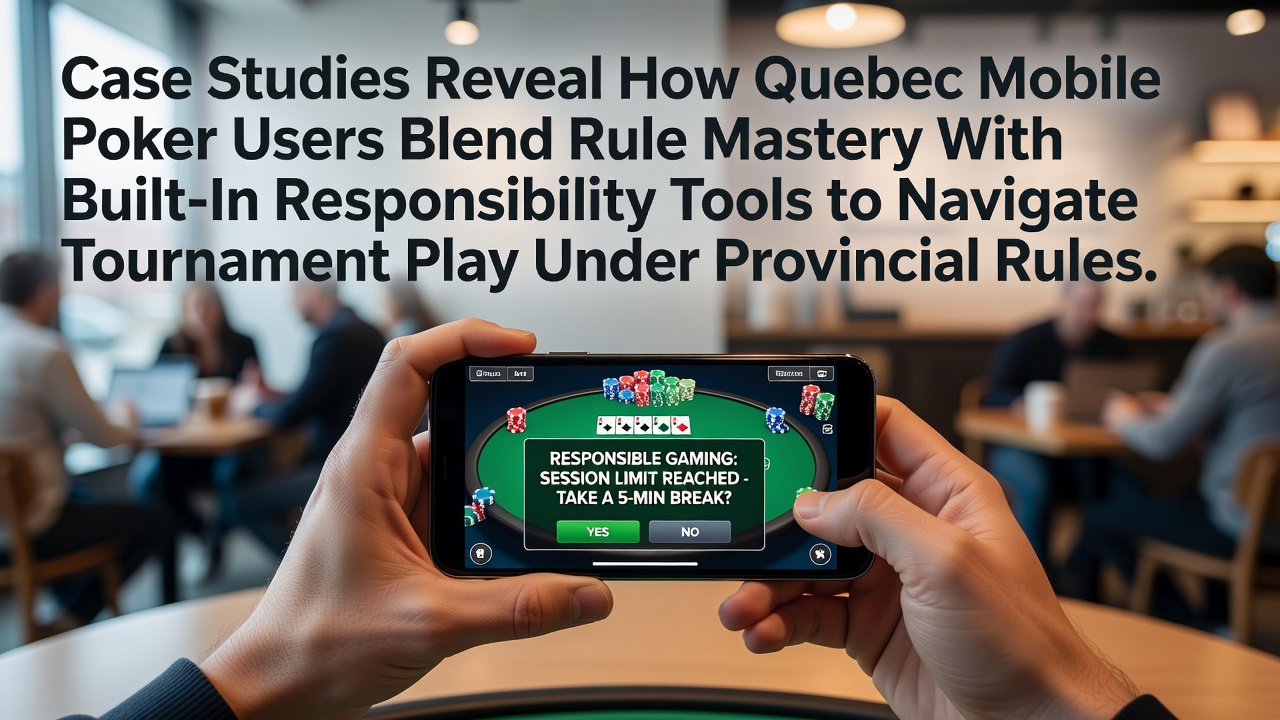
Case Studies Reveal How Quebec Mobile Poker Users Blend Rule Mastery With Built-In Responsibility Tools to Navigate Tournament Play Under Provincial Rules
Quebec mobile poker users have developed approaches that combine deep knowledge of provincial tournament regulations with features like session timers, deposit caps, and self-exclusion options built into licensed applications, according to multiple case studies conducted between 2024 and 2026. These patterns emerge under the oversight of bodies such as Loto-Québec and the Régie des loteries et courses du Québec, where players must adhere to strict rules on blind structures, payout schedules, and registration windows that differ from unregulated platforms.
Provincial Framework Shapes Tournament Access
Rules governing Texas hold'em and other variants require participants to verify age and location through geofencing while completing identity checks before entering events, and data from provincial regulators shows consistent enforcement across major operators. Players often study these statutes in advance, reviewing hand histories and payout structures that align with amendments introduced in recent years, which has led some observers to note increased preparation times ahead of multi-table events. In October 2026, several platforms plan to roll out updated interfaces that highlight compliance reminders during registration, reflecting ongoing adjustments to align with evolving statutes.
Responsibility Tools Integrate With Strategic Preparation
Built-in mechanisms such as reality checks that pause play after set intervals and loss-limit alerts allow users to maintain focus on rule application without external interruptions, and studies from the Australian Gambling Research Centre indicate similar patterns among regulated users elsewhere. Quebec participants frequently activate these options before tournaments begin, setting boundaries that match their bankroll management strategies derived from provincial guidelines on minimum buy-ins and re-entry policies. One documented case involved a group of recreational players who combined pre-tournament rule reviews with automated cool-down periods, resulting in sustained participation across weekly series without exceeding personal thresholds.
What's interesting is how these tools complement rather than compete with competitive elements, as users report configuring notifications to coincide with key decision points like final table approaches, thereby preserving concentration on positional play and odds calculations mandated by local licensing terms. Figures from industry reports reveal that adoption rates for such features rose notably in Quebec apps during 2025, coinciding with expanded tournament calendars that included satellite qualifiers feeding into larger guaranteed prize pools.

Case Examples Illustrate Blended Approaches
Researchers tracking user behavior identified several instances where individuals navigated complex multi-day events by layering rule mastery onto responsibility settings, such as one player who mastered ICM calculations specific to provincial payout structures while maintaining a daily time cap enforced by the app. Another example highlighted a cohort preparing for October 2026 qualifiers who cross-referenced official rulebooks with in-app limit setters, allowing them to adjust aggression levels according to stack depths without risking extended sessions that breach provincial play-time recommendations. These cases demonstrate how features mandated under Quebec law, including mandatory breaks after four hours of continuous play, integrate into broader preparation routines that emphasize variance awareness and table selection based on field sizes disclosed in tournament lobbies.
Additional observations from longitudinal tracking show users who excel at interpreting provincial restrictions on collusion and chip dumping also tend to utilize voluntary exclusion lists for specific events, creating buffers that support long-term engagement. Data indicates that such combinations appear more frequently among those who complete mandatory responsible gaming modules offered at registration, which cover topics from hand-ranking fundamentals to dispute resolution processes unique to the province.
Platform Adaptations Support User Strategies
Operators licensed in Quebec have introduced dashboard elements that display both tournament rules and active responsibility settings side by side, enabling seamless toggling between strategic notes and limit adjustments during breaks. This design aligns with requirements from the provincial gaming authority and has been linked in internal audits to higher retention in structured events. External analysis from the National Council on Problem Gambling further contextualizes these developments by comparing adoption across North American jurisdictions, noting that Quebec's framework emphasizes proactive tool integration over reactive interventions.
Participants often reference these interfaces when planning entries for upcoming series, cross-checking blind progression schedules against their configured session alerts to optimize decision-making windows. In practice, this has produced documented instances of players advancing deeper into events while respecting automated warnings tied to cumulative losses or elapsed time, all within the boundaries set by Quebec statutes.
Conclusion
Case studies continue to document how Quebec mobile poker users merge regulatory knowledge with available responsibility mechanisms to handle tournament demands, particularly as platforms prepare enhancements scheduled around October 2026. These approaches reflect the province's structured environment where rule compliance and self-management features operate in tandem, supported by data from regulatory bodies and independent research organizations. Ongoing monitoring will likely track how such integrations evolve with further platform updates and seasonal tournament cycles.